
ASPINE Wellness Singapore
Spinal Rehabilitation Equipment & Technology
ASPINE Wellness uses selected rehabilitation technologies to support spinal care, posture rehabilitation, movement and pain management when clinically appropriate.
Equipment is not used as a stand-alone cure. Your clinician first reviews your symptoms, health history, examination findings and goals before deciding whether a particular technology may have a useful role in your care plan.
What rehabilitation technology does ASPINE Wellness use?
Our current rehabilitation technology includes the Minato Super Track ST-2CL for controlled cervical and lumbar traction, Posture Remodeling Traction for selected posture and scoliosis rehabilitation programmes, and the BTL Super Inductive System (SIS) for high-intensity electromagnetic neuromuscular stimulation.
The technology chosen depends on the patient and may be combined with chiropractic care, physiotherapy, corrective exercise, TCM or Scolio-Pilates when appropriate. Explore ASPINE services.
Minato Super Track ST-2CL
Seated cervical and lumbar traction
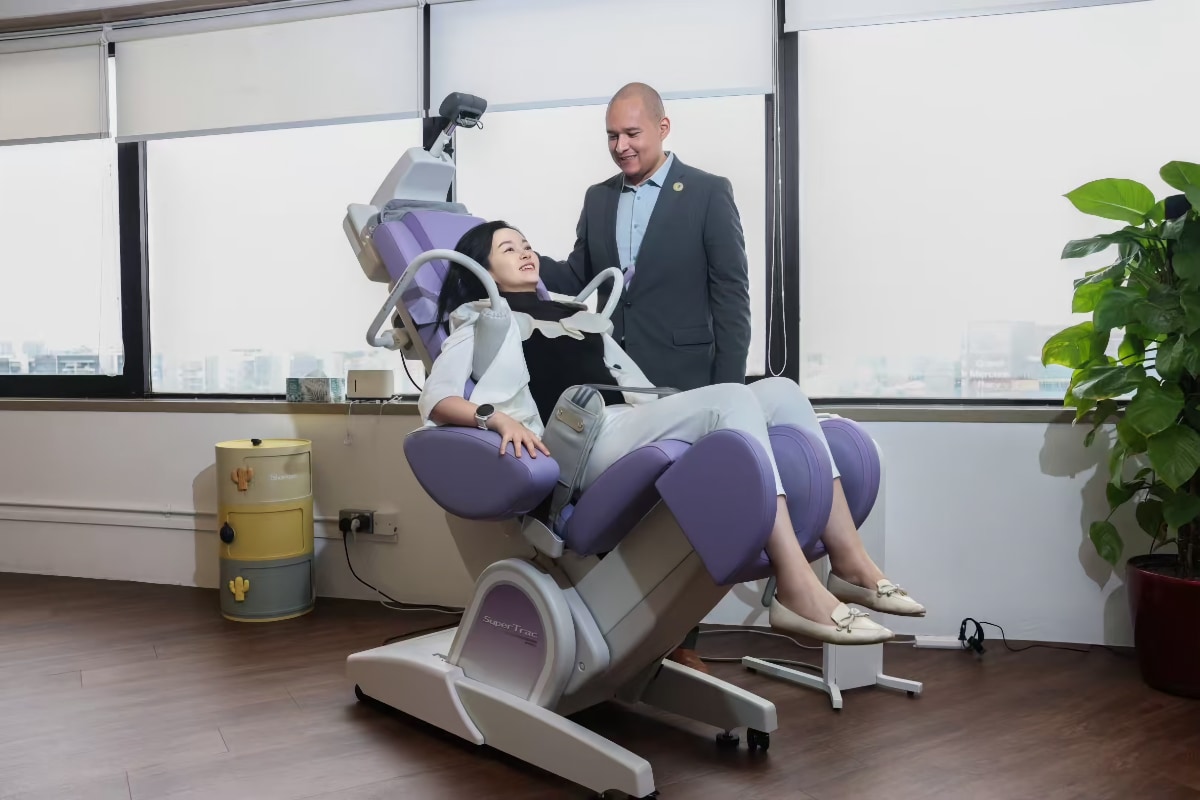
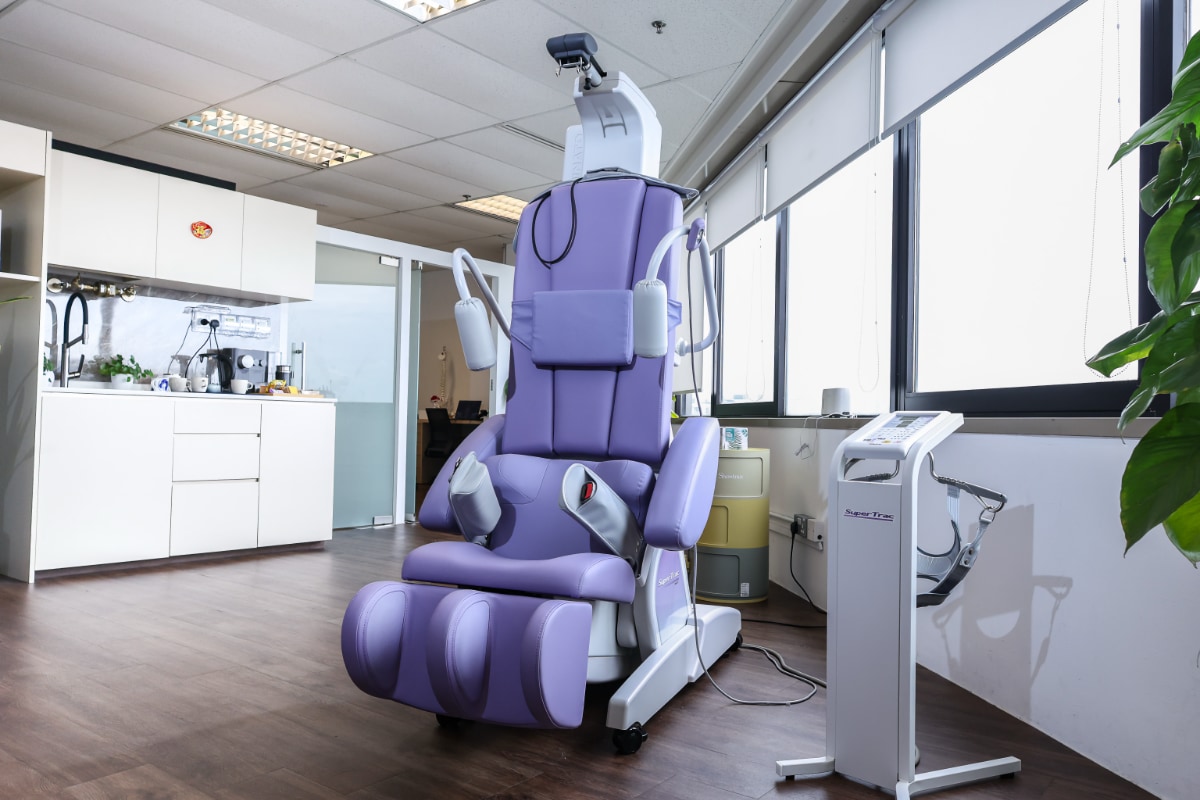
The Minato Super Track ST-2CL is a two-way automatic traction unit designed for both cervical and lumbar traction while the patient remains seated. According to Minato Medical Science, the cervical and lumbar functions use separate systems and independent force sensors so that traction can be controlled for each region.
Manufacturer specifications list lumbar traction from 50 to 990 N and cervical traction from 10 to 250 N, with intermittent and continuous traction modes. The system also includes a safety remote controller and abnormal-operation detection.
How ASPINE may use it
At ASPINE, controlled cervical or lumbar traction may be considered for selected patients with mechanical neck or lower-back symptoms, including some disc-related presentations, after clinical assessment. It is used as part of a broader rehabilitation plan rather than as a treatment for every neck or back condition.
Manufacturer reference: Minato Medical Science, Super Track ST-2CL.
Posture Remodeling Traction (PRT)
Position-specific traction for posture and scoliosis rehabilitation
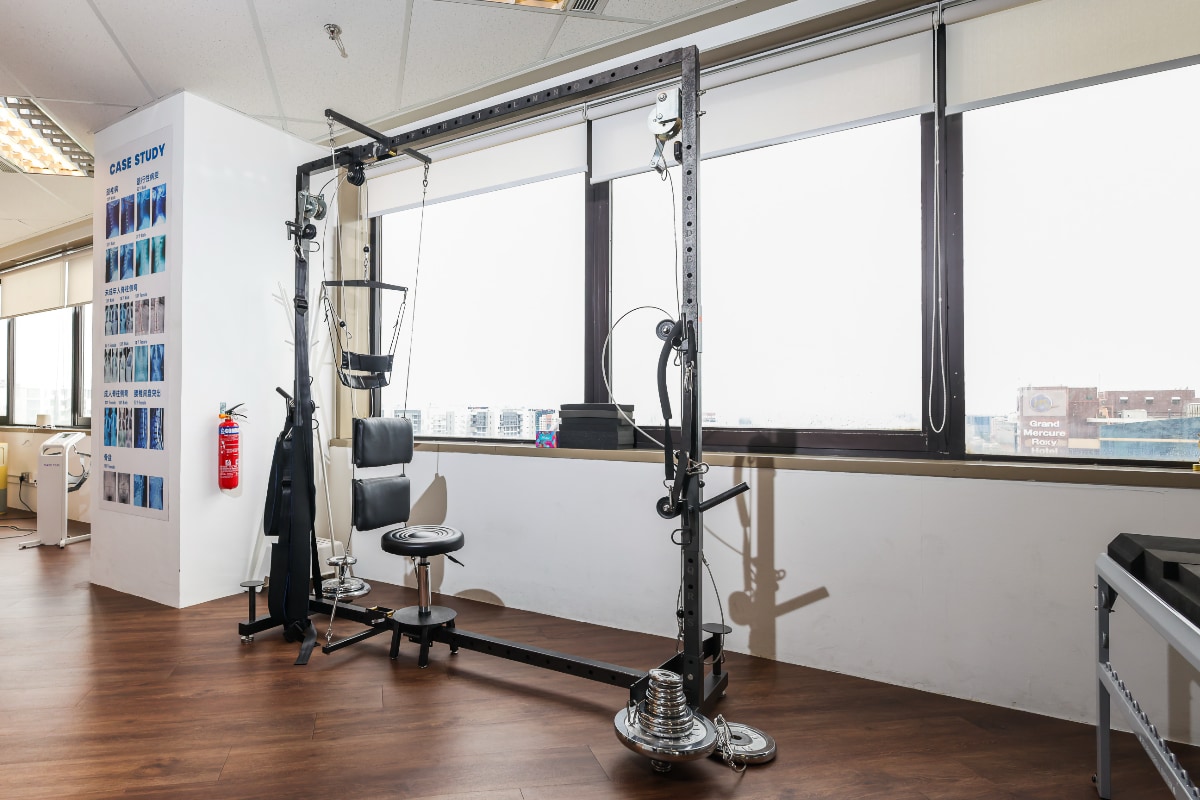
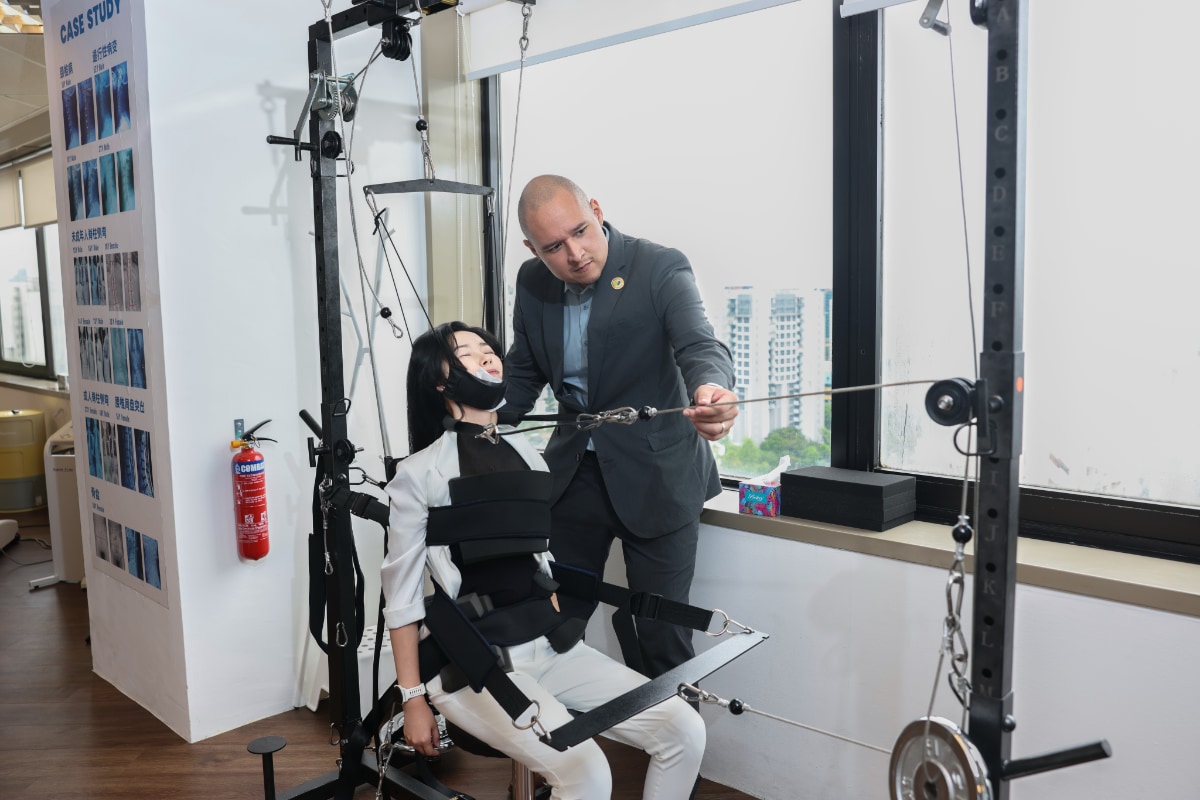
Posture Remodeling Traction uses sustained, controlled positioning and traction as one component of posture-focused rehabilitation. At ASPINE, it may be incorporated into selected programmes for posture-related concerns or scoliosis rehabilitation alongside appropriate exercise, movement training and clinical care.
The inspiration behind ASPINE’s PRT approach
Our founders learned Chiropractic BioPhysics® (CBP®) principles during chiropractic school. Building on that foundation, they developed ASPINE’s Posture Remodeling Traction (PRT) equipment using CBP principles of position-specific spinal loading and posture-focused rehabilitation.
At ASPINE, PRT is integrated with individual exercise, movement training and hands-on care when clinically appropriate. The CBP research below explains the principles that informed its development; these studies evaluated CBP protocols and are not direct clinical trials of ASPINE’s PRT equipment.
What does the published research report?
A five-patient cervical kyphosis case series (2026): Following combined extension traction, exercises and manipulation, average cervical lordosis increased by 24.4° and regional kyphosis decreased by 18.1°. Pain and disability also improved. At follow-up 11.5 months to 3.7 years later, without continued treatment, average lordosis correction had regressed by 10°, although disability remained improved. This retrospective series had no control group and cannot isolate traction’s contribution.
A single-patient long-term follow-up report (2024): The authors reported sustained improvement in neck pain, headaches and disability after a programme combining specific traction, exercise and manipulation. The patient continued home exercises. Some cervical alignment gains regressed. The paper describes a 13-year follow-up, but its abstract and main text contain inconsistent treatment dates. One case cannot establish typical outcomes or treatment effectiveness.
How does this evidence apply to PRT?
These reports document outcomes in selected patients receiving combined CBP rehabilitation. They do not establish equivalent results with ASPINE’s PRT, demonstrate scoliosis correction, or prove that twice-monthly maintenance is necessary for every patient. Both papers disclose CBP-related financial or professional relationships. Larger controlled studies and direct evaluation of PRT are needed to establish its effectiveness and long-term outcomes.
At ASPINE, traction selection, positioning and progression depend on individual assessment, tolerance and goals. We review symptoms, function and response to care; imaging is considered when clinically justified. No particular curve change, permanent correction or fixed maintenance schedule is guaranteed.
Research and background reading
- Norton et al. (2026). Long-term stability of reducing cervical kyphosis via Chiropractic Biophysics® extension traction procedures: a case series. Journal of Physical Therapy Science.
- Haas et al. (2024). A 13-Year Long-Term Follow-Up of a Case Report With Continued Improvement in Severe Chronic Neck and Head Pain Alleviated With Chiropractic BioPhysics® Spinal Rehabilitation Protocols. Cureus.
- Ideal Spine’s explanation of the cervical kyphosis case series (CBP provider commentary on the same study, not an additional independent study).
Read more about posture or explore our integrated spine and scoliosis services.
BTL Super Inductive System (SIS)
High-intensity electromagnetic neuromuscular stimulation

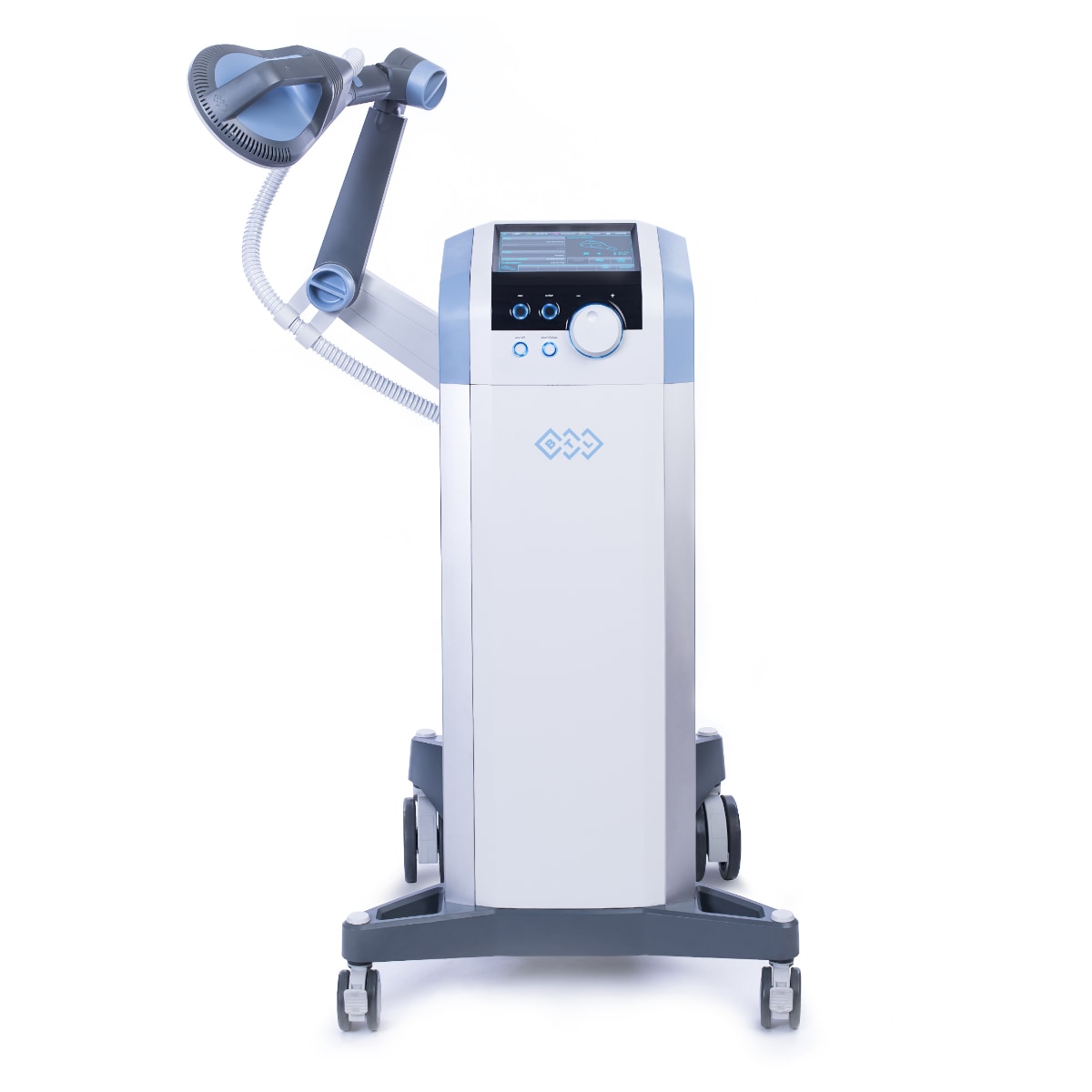
The BTL-6000 Super Inductive System uses a high-intensity electromagnetic field to stimulate neuromuscular tissue. BTL technical documentation for the Elite system lists field intensity up to 2.5 Tesla and frequency up to 150 Hz.
BTL describes applications that include pain management, muscle stimulation and relaxation, joint-mobility work and rehabilitation of selected neuromuscular and musculoskeletal conditions. These are manufacturer-described uses and do not mean the device is appropriate for every condition or that a particular outcome is guaranteed.
How ASPINE may use it
At ASPINE, SIS may be incorporated into rehabilitation for selected musculoskeletal or neuromuscular presentations, including pain-management, muscle-activation and movement-related goals. Suitability depends on the patient’s assessment, health history and rehabilitation objectives.
Manufacturer reference: BTL Super Inductive System.
How do we decide which equipment to use?
- Assess: understand your symptoms, health history, posture, movement and goals.
- Select: determine whether a particular technology is appropriate and whether it adds value to the care plan.
- Integrate: combine technology with hands-on care, exercise, movement or other rehabilitation when clinically appropriate.
- Reassess: review your response and modify the plan rather than continuing a modality automatically.
You do not need to choose a machine before your appointment. Start with an assessment and the clinician can explain whether equipment is relevant to your case.
Frequently asked questions
Do I need rehabilitation equipment to get better?
No. Equipment is used only when it has a clear role in the individual care plan. Some patients may be managed without any of these technologies.
Is spinal traction suitable for everyone?
No. Suitability depends on the diagnosis, symptoms, examination findings and health history. Your clinician will determine whether cervical or lumbar traction is appropriate before treatment.
Can equipment treat scoliosis?
Technology may support selected aspects of scoliosis rehabilitation, but scoliosis management depends on factors such as age, growth, curve characteristics, symptoms and goals. Equipment does not replace appropriate monitoring, bracing or specialist referral when these are indicated.
Can SIS be used for every painful condition?
No. The Super Inductive System has specific clinical applications and safety considerations. Its use should follow an assessment rather than being selected solely because a patient has pain.
How many sessions will I need?
There is no universal number. Frequency and duration depend on the clinical presentation, the role of the equipment in the care plan and the patient’s response.
Start with an assessment
If you are unsure whether traction, SIS or another rehabilitation technology is appropriate, begin with a clinical assessment. We can explain the options, limitations and how technology may fit into a broader care plan.
Book an Appointment or WhatsApp +65 8011 3111.
Information on this page is general and does not replace individual clinical assessment. Equipment selection, treatment parameters and recommendations vary by patient and condition.
Technical references
- Minato Medical Science Co., Ltd. Super Track ST-2CL product information and specifications.
- BTL. Super Inductive System product information.
Manufacturer specifications describe device capabilities and intended applications. They should not be interpreted as independent evidence that every patient will experience a particular clinical outcome.

