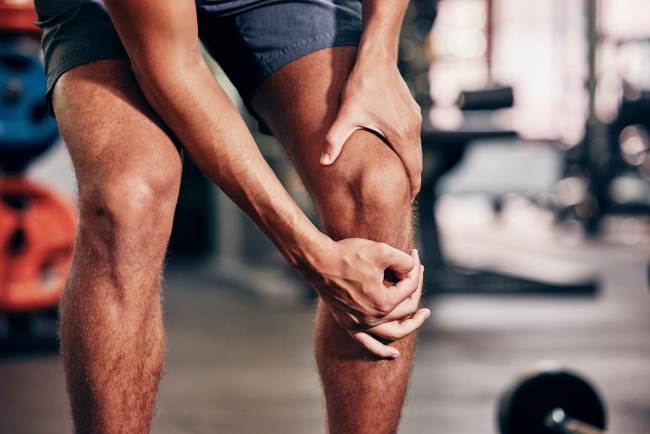
Knee pain has many possible causes, ranging from temporary strains and overuse to tendon problems, meniscal or ligament injuries and osteoarthritis. How the pain started, where it is felt, whether the knee is swollen, locking or giving way, and how it affects activity all help guide assessment.
Key takeaways
- Knee pain is a symptom, not a diagnosis.
- Sudden injury and gradual-onset pain require different clinical reasoning.
- Locking, giving way, major swelling or inability to bear weight need assessment.
- Exercise is a core treatment for knee osteoarthritis.
- Manual therapy should not replace exercise when osteoarthritis is the main problem.
What commonly causes knee pain?
After a twist, fall or sporting injury, possible causes include sprains, ligament injury, meniscal injury, tendon injury or kneecap dislocation. Gradual pain can be associated with tendon overload, bursitis, patellofemoral pain or osteoarthritis.
A hot, red and very painful swollen knee can also indicate an inflammatory or infectious problem and requires prompt medical attention.
Does the location of pain matter?
Yes, although location alone is not enough to diagnose the problem. Pain around the kneecap, along a tendon, at the joint line or behind the knee can point the assessment in different directions.
The clinician will also consider swelling, range of motion, strength, stability, walking, stairs, squatting and the activity that triggered the symptoms.
What about knee osteoarthritis?
Knee osteoarthritis becomes more common with age and can cause pain, stiffness and reduced function. NICE identifies tailored therapeutic exercise as a core treatment for osteoarthritis and recommends considering supervised exercise when appropriate.
Exercise may initially cause some discomfort, but consistent strengthening and aerobic activity can improve pain and function over time. For people who are overweight or obese, weight management may also be part of an evidence-based plan.
Where does manual therapy fit?
For hip or knee osteoarthritis, NICE advises that manual therapy should only be considered alongside therapeutic exercise and notes that there is not enough evidence to support its use by itself.
That fits ASPINE’s broader approach: hands-on treatment, when used, should support movement and rehabilitation rather than replace them.
Do I need a scan?
Not every painful knee requires imaging. Imaging may be appropriate when the history and examination suggest a fracture, significant internal injury, atypical condition or when the result would influence treatment.
When should knee pain be assessed urgently?
Seek prompt medical advice if:
- the knee is very painful and you cannot bear weight;
- the knee is badly swollen or has changed shape;
- it locks or repeatedly gives way;
- there is significant pain after trauma;
- the joint is hot and red and you have a fever or feel unwell; or
- symptoms are rapidly worsening.
Frequently asked questions
Should I rest a painful knee completely?
It depends on the injury. A recent traumatic injury may need short-term protection, but prolonged inactivity is not usually the goal for common overuse problems or osteoarthritis. Rehabilitation typically progresses activity according to tolerance.
Can strengthening help knee pain?
Yes for many common knee presentations. In osteoarthritis specifically, therapeutic exercise is a core guideline-recommended treatment.
Does clicking mean my knee is damaged?
Not necessarily. Painless clicking is common. Painful clicking together with locking, swelling, instability or a recent injury deserves assessment.
Can the hip or ankle affect knee rehabilitation?
Yes. Strength, mobility and movement at adjacent regions can influence how the knee is loaded, so rehabilitation often looks beyond the knee itself.
Book a knee assessment
If knee pain is limiting walking, stairs, sport or exercise, an assessment can help identify the likely problem and build an appropriate rehabilitation plan.
References
- NHS. Knee pain.
- NICE. Osteoarthritis in over 16s: diagnosis and management. NG226.
This article is for general educational purposes and does not replace individual medical assessment.
Ready to discuss your symptoms?
Book an assessment with ASPINE Wellness to understand your concerns and explore the appropriate next steps.