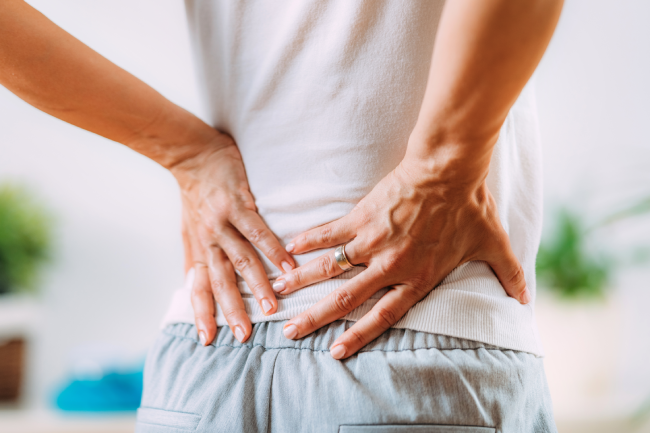
Sciatica describes symptoms caused by irritation or compression of a nerve that contributes to the sciatic nerve. Pain commonly travels from the buttock down the back or side of one leg and may be accompanied by tingling, numbness or weakness. It is different from ordinary lower back pain, although the two can occur together.
Key takeaways
- Sciatica usually produces leg symptoms, not just back pain.
- A herniated lumbar disc is a common cause, but spinal stenosis and other conditions can also contribute.
- Most people do not need immediate imaging.
- Staying active and exercise-based rehabilitation may be appropriate depending on severity and neurological findings.
- New bladder/bowel changes or saddle numbness require urgent medical care.
What does sciatica feel like?
Sciatica may cause:
- burning, sharp or electric-type pain into the buttock or leg;
- tingling or pins and needles;
- numbness;
- weakness; or
- symptoms that change with sitting, bending, coughing or certain movements.
The pattern varies depending on which nerve root is irritated. Back pain may be present, but the leg symptoms are often what distinguish sciatica from uncomplicated low back pain.
What causes sciatica?
The NHS identifies lumbar disc herniation as a common cause. Other causes can include narrowing around the nerves, spondylolisthesis and back injury.
Because several conditions can produce similar symptoms, sciatica is best considered a symptom pattern rather than a complete diagnosis by itself.
Do I need an MRI for sciatica?
Not automatically. NICE recommends against routine imaging for low back pain with or without sciatica in non-specialist settings. Imaging may be useful when symptoms persist, neurological findings are worsening, surgery is being considered or the result is likely to change management.
What can help?
Management depends on the severity and cause. It may include:
- continuing normal activity as much as possible;
- graded exercise and rehabilitation;
- physiotherapy;
- education about positions and activities that aggravate or ease symptoms;
- manual therapy for selected patients as part of an exercise-based plan; and
- medical or specialist management for severe or persistent symptoms.
NICE specifically recommends against traction for routine management of low back pain with or without sciatica. At ASPINE, a sciatica presentation therefore starts with assessment rather than automatically being directed to a traction device.
When is surgery considered?
Most people with sciatica do not go straight to surgery. NICE advises considering spinal decompression when non-surgical treatment has not improved pain or function and imaging findings are consistent with the sciatic symptoms.
What are the emergency warning signs?
Seek emergency medical assessment if sciatica or back pain occurs with:
- numbness around the genitals, anus or saddle area;
- difficulty starting urination;
- loss of bladder or bowel control;
- significant or worsening weakness in both legs; or
- loss of sensation or rapidly worsening neurological symptoms.
Frequently asked questions
Is sciatica the same as a herniated disc?
No. Sciatica is a symptom pattern. A herniated disc is one possible cause.
Can sciatica go away without surgery?
Yes. Many cases improve with non-surgical management. Persistent severe pain or progressive neurological deficits may require specialist assessment.
Should I stretch the sciatic nerve?
Not aggressively. Some movements may help while others can aggravate a sensitive nerve. Exercise should be selected based on your presentation rather than forcing a painful stretch.
Can chiropractic care be part of sciatica management?
Manual therapy may be considered for selected patients, but NICE recommends that it be delivered as part of a broader treatment package including exercise rather than as a stand-alone treatment.
Book a sciatica assessment
If you have pain travelling down the leg, tingling, numbness or weakness, an assessment can help determine whether nerve irritation is likely and whether conservative care or medical referral is appropriate.
References
- NHS. Sciatica.
- NICE. Low back pain and sciatica in over 16s: assessment and management. NG59.
This article is for general educational purposes and does not replace individual medical assessment.
Ready to discuss your symptoms?
Book an assessment with ASPINE Wellness to understand your concerns and explore the appropriate next steps.