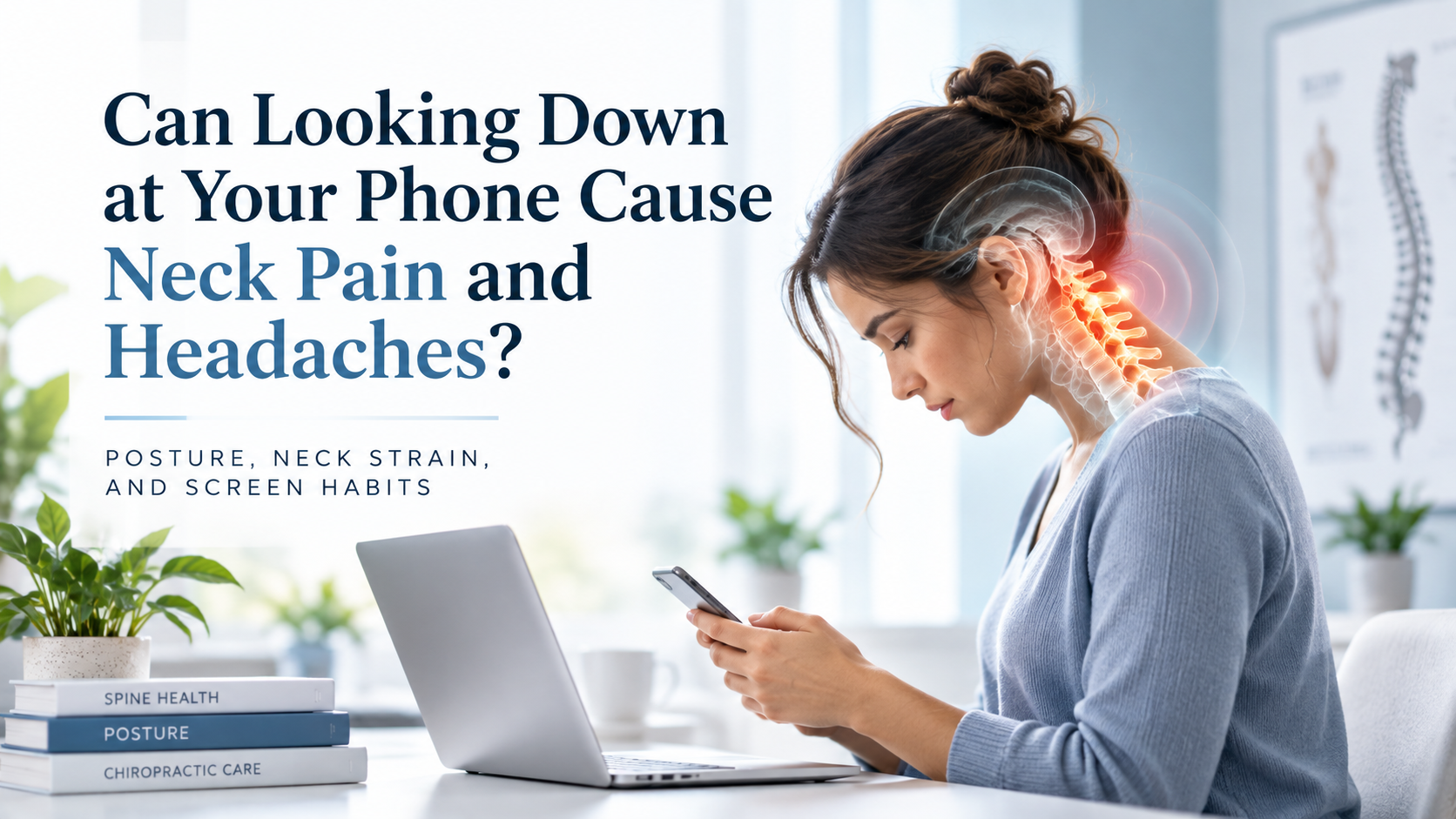
Yes, prolonged time looking down at a phone or laptop can contribute to neck pain, stiffness and, in some people, headaches. The issue is not that bending your neck is inherently harmful. Your neck is designed to move. Problems are more likely when you stay in one position for a long time, particularly when the head is held forward and the neck muscles must work continuously.
Key takeaways
- Looking down is normal; the bigger issue is staying in one position for too long.
- Prolonged screen use may contribute to neck muscle fatigue, stiffness and some neck-related headaches.
- Movement breaks, screen-height changes, exercise and selected manual treatments may help depending on the cause.
- Sudden, severe, worsening or neurologically associated headaches need medical assessment.
Many of my patients spend hours on phones or laptops, and I do it too. After too much time in the same position, it is common to feel tightness or tenderness around the base of the skull, upper neck and shoulders.
Why can looking down at a phone make your neck hurt?
The muscles at the back of the neck help support and control the head. When the head remains forward or downward for prolonged periods, these muscles may fatigue and become sensitive. The small suboccipital muscles near the base of the skull can also feel tender.
This does not mean that looking down is damaging your spine every time you use your phone. Movement itself is normal. The more relevant issue is prolonged, repetitive loading without enough variation or recovery.
If you would like a broader explanation of how posture relates to spinal comfort, read our guide on why posture matters.
Can neck tension cause headaches?
Sometimes. Headaches that arise from structures in the neck are commonly referred to as cervicogenic headaches. They may be associated with neck pain, reduced neck movement, and pain that is influenced by neck position or movement.
However, not every headache felt near the back of the head is cervicogenic. Migraine, tension-type headache, medication-overuse headache and other conditions can produce overlapping symptoms. This is why an assessment matters when headaches are persistent, changing or difficult to explain.
What may help if screen use is contributing?
For uncomplicated mechanical neck discomfort, useful strategies often include:
- raising the phone, tablet or laptop closer to eye level;
- supporting the forearms when possible;
- changing position regularly rather than trying to maintain one “perfect” posture;
- taking brief movement breaks during prolonged screen use;
- neck and upper-back mobility or strengthening exercises when appropriate; and
- addressing local muscle and joint sensitivity when it is contributing to symptoms.
For selected people with cervicogenic headache, research suggests that manual therapy, exercise and spinal manipulation may provide symptom relief, although the size and durability of benefit vary and the evidence is not equally strong for every type of headache.
Where does chiropractic care fit?
When the neck appears to be contributing to the symptoms, chiropractic care may be one part of a broader management plan. Depending on the examination findings, this can include manual therapy, targeted exercise, movement advice, ergonomic changes and, where appropriate, spinal manipulation.
The aim is not simply to “put the neck back into place”. A more useful goal is to improve movement, reduce sensitivity and muscular tension, and help the neck tolerate normal daily activities more comfortably.
You can learn more about our approach on the ASPINE Wellness services page.
When should a headache be medically assessed?
Seek urgent medical assessment for a headache that is sudden and extremely severe, follows significant head trauma, or occurs with symptoms such as weakness, numbness, difficulty speaking, loss of vision, confusion, seizure, high fever or marked neck stiffness.
New, progressively worsening or substantially different headaches should also be assessed rather than automatically attributed to posture or the neck.
Simple changes you can try today
Start with the basics: raise the screen, support your arms, vary your posture and move regularly. You do not need to sit perfectly upright all day. A position that changes frequently is generally more realistic than trying to hold one rigid posture for hours.
Frequently asked questions
Is “text neck” a real condition?
“Text neck” is a popular term rather than a formal medical diagnosis. It usually describes neck discomfort associated with prolonged phone or screen use. The symptoms are real, but they are better understood as a combination of sustained posture, muscle fatigue, sensitivity and individual factors rather than simply the angle of the neck.
Can phone use cause headaches at the base of the skull?
It can contribute in some people, especially when prolonged screen use is associated with neck pain, muscle tenderness or restricted movement. But headaches at the base of the skull can have multiple causes, so persistent or unusual headaches should be properly assessed.
Should I keep my phone at eye level all the time?
No. The goal is not to avoid neck flexion completely. Instead, reduce long periods in the same position and change posture frequently.
Book a neck and posture assessment
If neck pain or headaches are repeatedly associated with work, phone use or prolonged sitting, a clinical assessment can help determine whether the neck is likely contributing and what management approach is appropriate.
Contact ASPINE Wellness to book a neck and posture assessment.
References
- Fernandez M, et al. Spinal manipulation for the management of cervicogenic headache: a systematic review and meta-analysis. European Journal of Pain. 2020;24(9):1687-1702. PubMed.
- Bini P, et al. The effectiveness of manual and exercise therapy on headache intensity and frequency among patients with cervicogenic headache: a systematic review and meta-analysis. Chiropractic & Manual Therapies. 2022. PubMed.
- Viera AJ, Antono B. Acute Headache in Adults: A Diagnostic Approach. American Family Physician. 2022;106(3):260-268. AAFP.
- NHS. Headaches. Reviewed 17 April 2024. NHS.
This article is for general educational purposes and is not a diagnosis or a substitute for individual medical assessment.