By Dr. Fuad Suyuti, Chiropractor
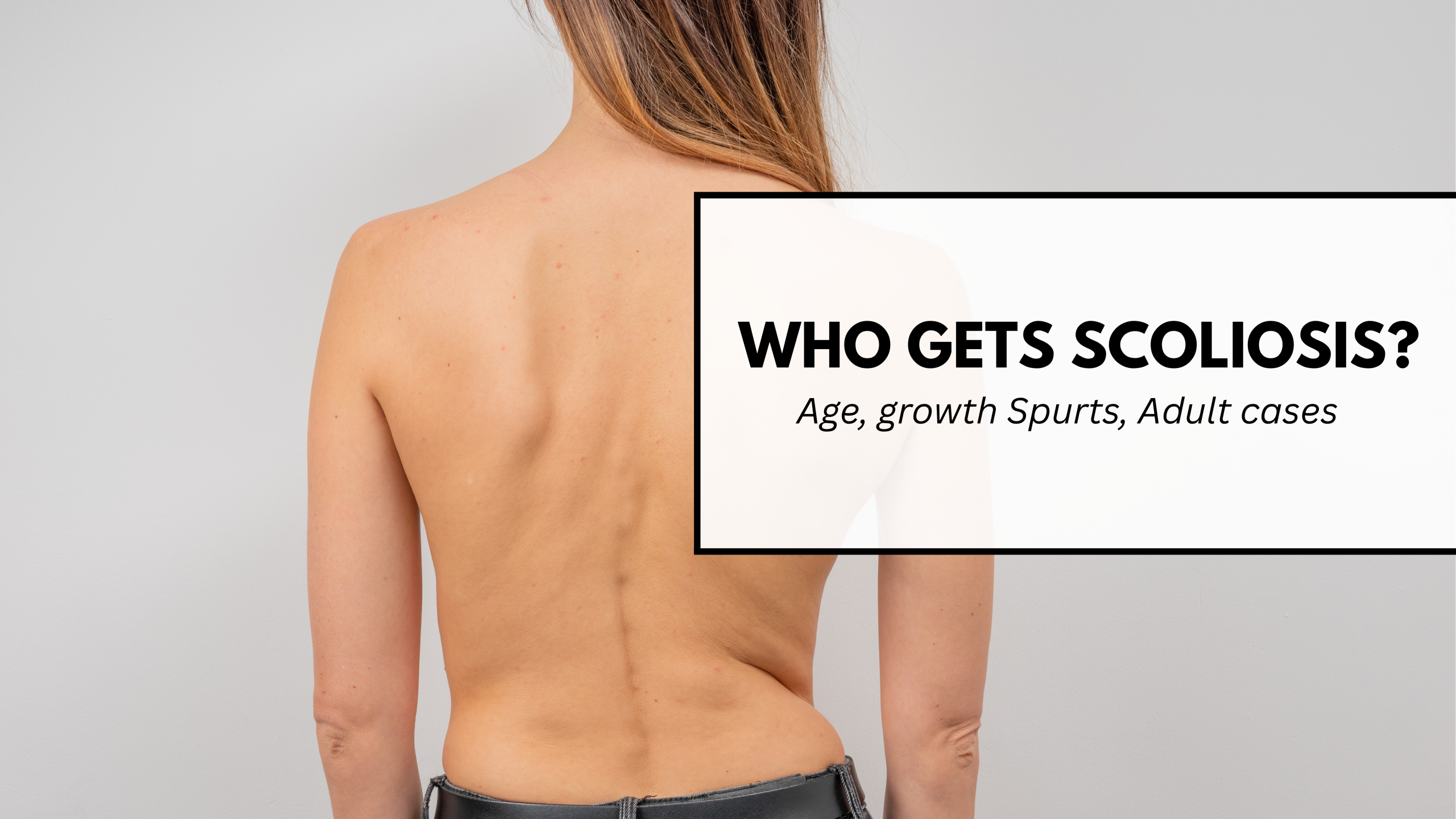
Scoliosis is often associated with children and teenagers, but adults can have it too. Age, remaining growth, curve size and symptoms all help guide assessment and management.
Why do growth spurts matter?
Adolescent idiopathic scoliosis affects young people aged 10 to 18. “Idiopathic” means the cause is unknown. Curves may progress during rapid growth, so a growing child with a suspected or confirmed curve needs assessment and appropriate monitoring.[1]
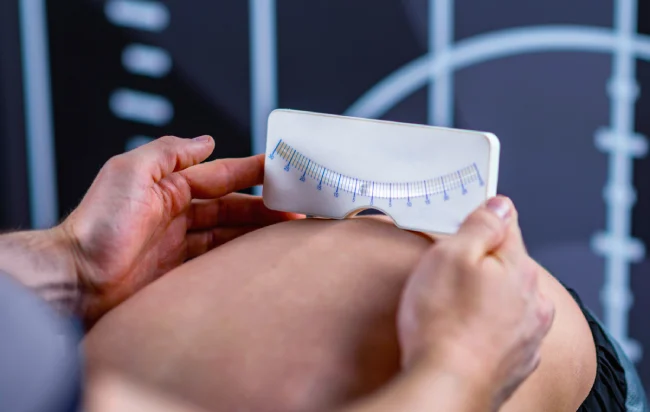
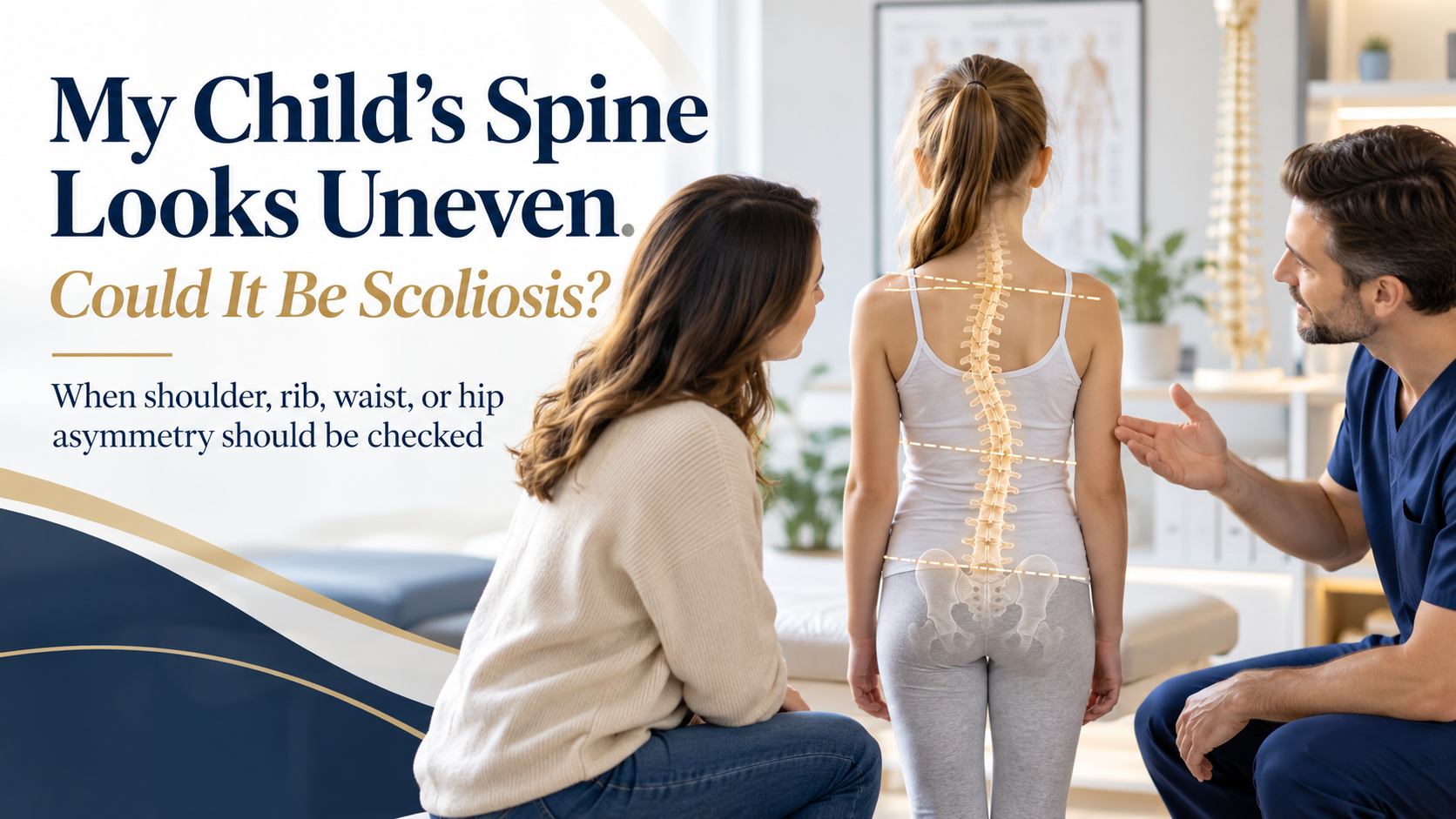
Uneven shoulders, waist asymmetry or a rib prominence on bending forward can be reasons to arrange an assessment. These signs alone do not confirm scoliosis. A clinician decides whether imaging is needed; spinal curves are measured on X-rays using the Cobb method.[1]
Can adults have scoliosis?
Yes. A curve identified in adolescence may remain in adulthood. Scoliosis may also develop later in life with degenerative spinal changes. Adult care depends on the person’s symptoms, function and curve behaviour.[2]
Exercise may support strength, movement and pain management. It should not be presented as a guaranteed way to straighten an adult spinal curve.[2]
A clinical observation from my practice
I currently have a patient in their thirties who performed their prescribed exercises regularly at home and attended the clinic twice a week for a total of 24 sessions. On follow-up assessment, I recorded an approximately 10-degree improvement in the measured curve.
This is an individual clinical observation, not a controlled study or a prediction of what another patient will achieve. It does not establish which part of the programme caused the change, or whether the change will persist. Interpretation depends on the measurement method, comparable assessment conditions and follow-up.
Why participation and reassessment matter
Home exercises and regular reassessment are part of an individualised management plan. Consistent participation helps patients carry out that plan, but does not guarantee a particular change in spinal curvature.
For younger patients, management considers remaining growth and the risk of progression. Observation, bracing or specialist referral may be appropriate.[1] For adults, goals often include pain management and maintaining movement and function.[2]
The number and frequency of visits should follow individual clinical needs and reassessment. The 24-session example is not a standard prescription for everyone.
When should you arrange an assessment?
If you notice spinal asymmetry in yourself or your child, speak to a qualified clinician about assessment and whether further investigation is appropriate.
Read My Child’s Spine Looks Uneven. Could It Be Scoliosis? and What Is Scoliosis? Signs, Cobb Angle and When to Get Checked.
Book a scoliosis consultation with ASPINE Wellness to discuss an appropriate assessment and management plan.
Further reading for parents
For additional reading, explore My Child Has Scoliosis by Dr. Juan Villa.
View the book on Amazon Singapore
References
- Scoliosis Research Society. Adolescent Idiopathic Scoliosis.
- NHS. Scoliosis: Treatment in adults; Scoliosis overview.