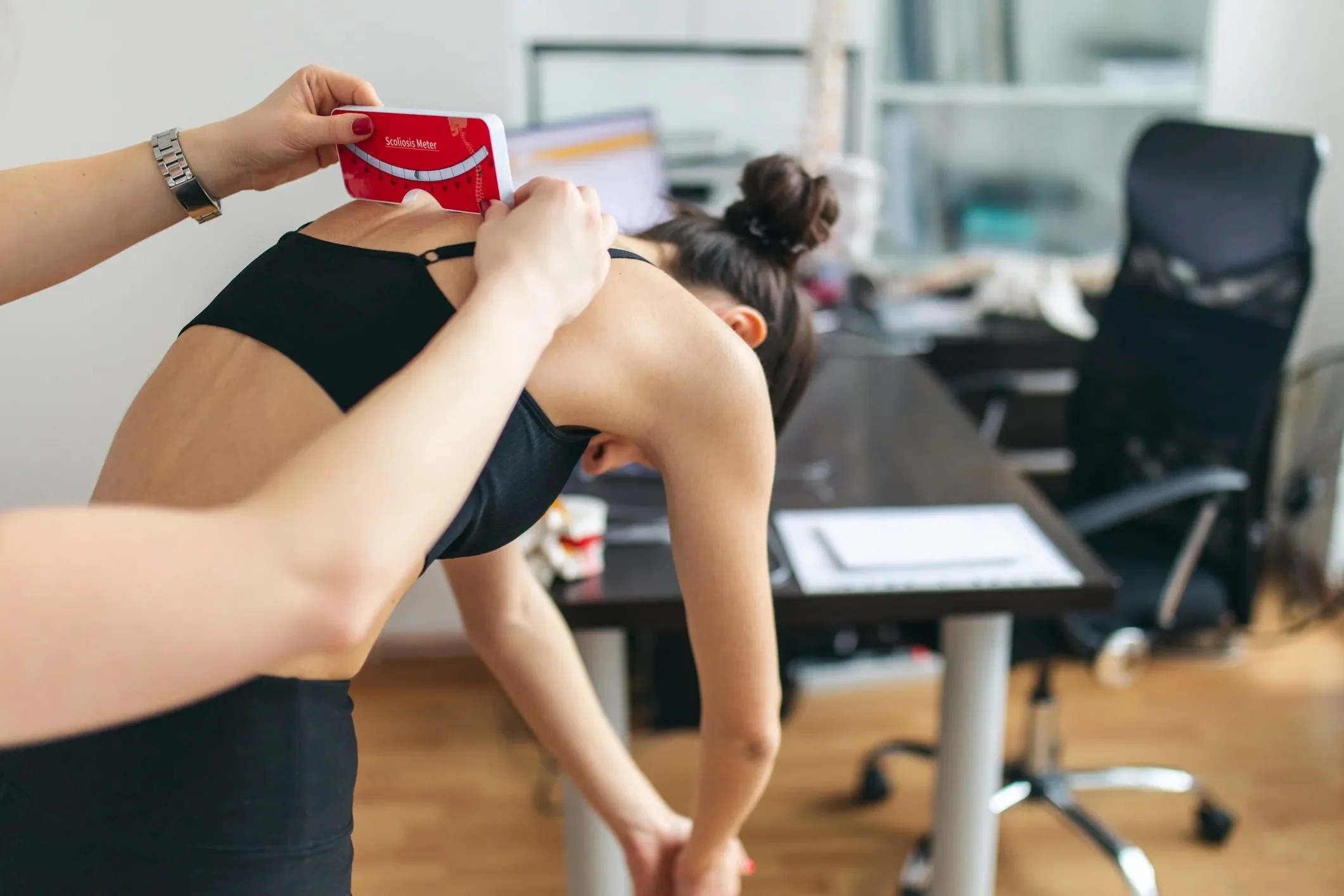
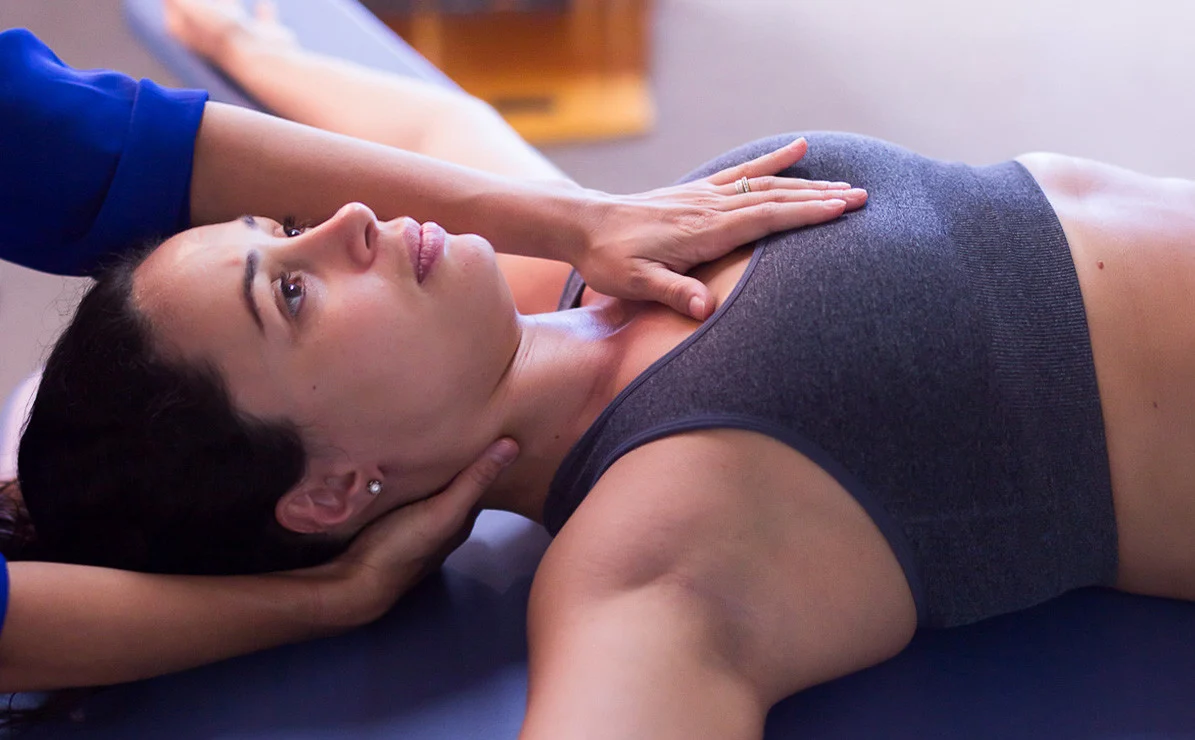
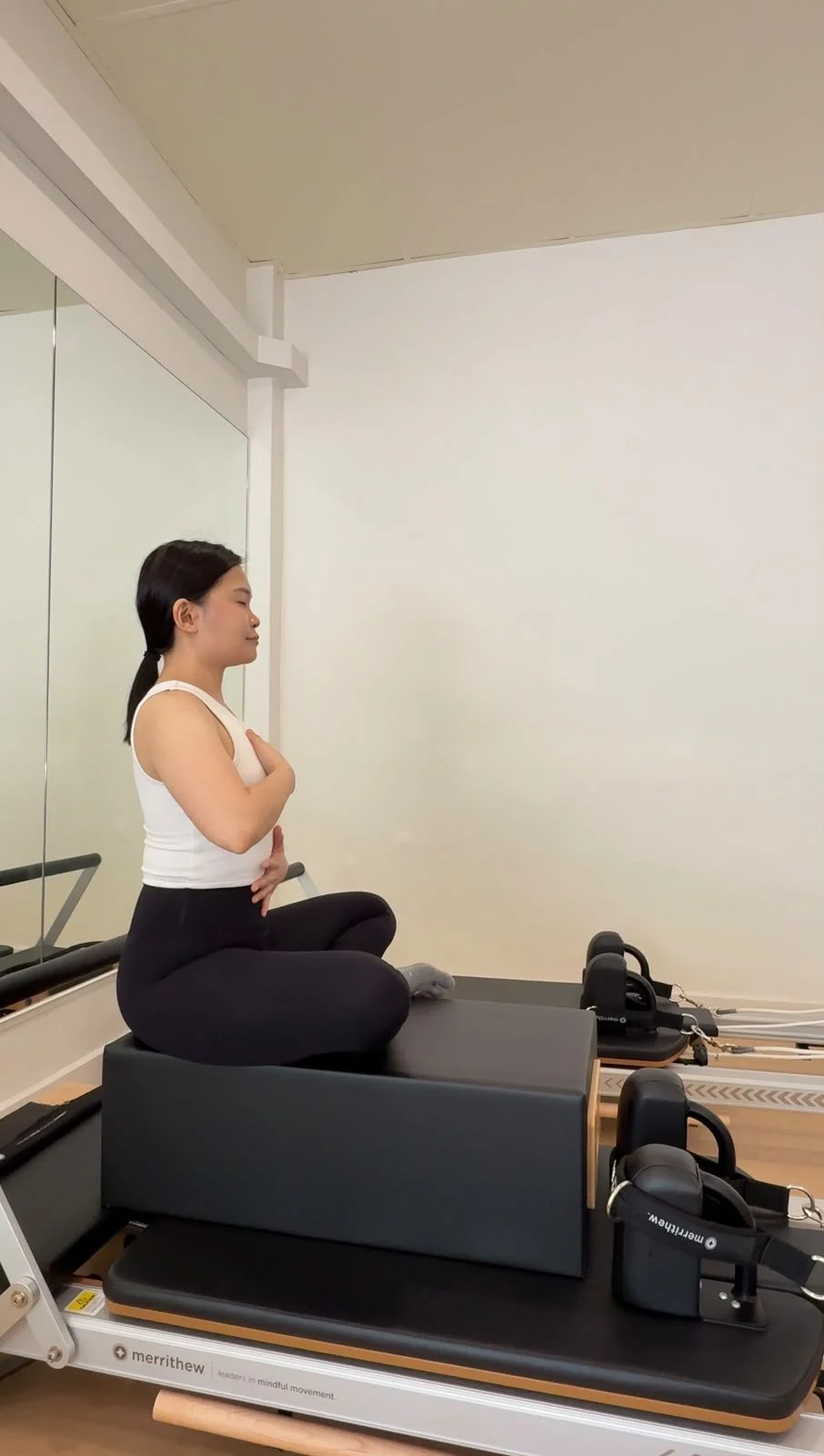
Feeling “longer”, more balanced or lighter after Scolio-Pilates® can be a meaningful personal experience, but it does not prove that fascia has been permanently changed or the vagus nerve has been “reset”. Movement, breathing, touch and the setting of a session may all influence how someone feels. The precise cause of an individual response is often uncertain.
Key takeaways
- Fascia is connective tissue associated with muscles and other structures; it is one part of a complex movement system.
- The vagus nerve contributes to automatic functions, including digestion and heart-rate regulation. Feeling relaxed does not demonstrate that a physical restriction around it has been removed.
- Joanne’s training experience is a personal account, not evidence that release work treats digestive or respiratory conditions.
- Scolio-Pilates goals can include movement awareness, comfortable breathing and function. A whole-body “reset” is a metaphor, not an established medical outcome.
Why can a session feel different from a workout?
A Scolio-Pilates session may involve supported positions, attention to breathing and individually selected movements rather than simply counting repetitions. Some people describe a change in perceived tension, balance or ease of movement. Those impressions can guide a conversation about comfort and goals, but they are not measurements of spinal alignment or nerve function.
The word “reset” can be a useful way to describe feeling different after a session. It should not be taken to mean that a body system was switched off beforehand or has now been restored to an ideal state.
Understanding fascia: part of the connective-tissue system
Fascia is connective tissue that surrounds, separates and links structures such as muscles. It contributes to how tissues are organised and interact during movement. Muscles, joints, nerves, connective tissues and the brain all contribute to movement and sensation.
However, describing fascia as a connected network does not establish that one tight area pulls every part of the body out of balance, or that a particular release “unwinds” scoliosis. A sensation of tightness also does not by itself identify a fascial restriction.
“Myofascial release” is used for a range of hands-on soft-tissue techniques. Research on manual therapy cannot automatically be applied to a particular Scolio-Pilates technique. The US National Center for Complementary and Integrative Health describes possible benefits of massage for some symptoms while noting limitations in the evidence.
Joanne’s personal experience during training in Taiwan
The following is Joanne’s account, adapted from her supplied text.
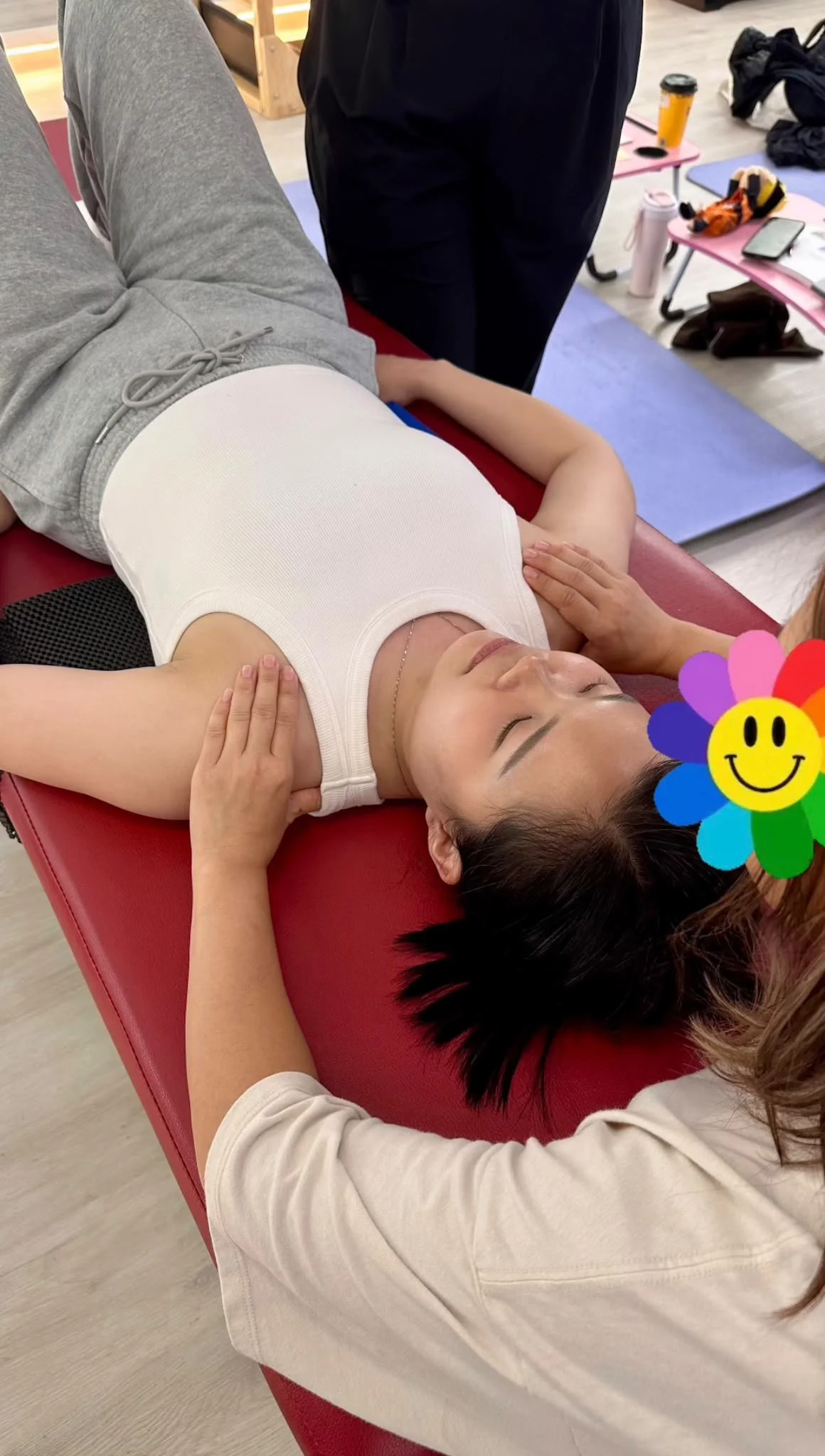
During Scolio-Pilates Module 3 training in Taiwan, I modelled for the class. Karena and the students performed approximately 12 neck and shoulder release techniques on me. I experienced the work as deep and precise.
A few hours later, I noticed changes in my bowel activity and brought up more mucus after a cold I had experienced the previous week. I found the experience striking, and I have continued to feel benefits since the training.
These are Joanne’s observations. They do not establish that the release work caused the bowel or respiratory changes, or show how long any specific effect lasted. Recovery from a cold, changes in food, hydration, activity, travel, stress and ordinary variation could also contribute. There were no measurements here demonstrating vagus nerve compression, release or altered function.
Passing stool or coughing up mucus is not proof of detoxification, a digestive “clean-out” or a beneficial nervous-system reset. New symptoms should be interpreted on their own merits rather than assumed to be a treatment response.
What does the vagus nerve actually do?
The vagus nerves travel from the brainstem through the neck into the chest and abdomen. They carry signals involved in several automatic functions, including aspects of digestion and heart-rate regulation. They are part of the parasympathetic nervous system, often described as “rest and digest”. See the Cleveland Clinic overview of the vagus nerve.
This description is a simplification: the body does not operate as a single switch between “fight or flight” and “rest and digest”. Stress does not mean that digestion and breathing stop working, and relaxation does not prove that a nerve has been physically freed.
There is no evidence in Joanne’s account that fascia was compressing her vagus nerve or that shoulder and neck work removed that compression. We should therefore avoid presenting this as the explanation for her experience.
What can we reasonably say about relaxation?
Some people may feel calmer during gentle movement, comfortable breathing or hands-on care. That can be a worthwhile personal outcome. It does not establish a specific parasympathetic mechanism, improved organ function or lasting treatment of a medical condition.
An overview of systematic reviews on manual therapy and autonomic effects describes heterogeneous findings. Research on autonomic measurements should not be translated into a claim that Scolio-Pilates “resets” the vagus nerve or clears lung congestion.
| Observation | What it does not establish |
|---|---|
| “I feel lighter or more balanced.” | Permanent fascial lengthening or structural spinal correction. |
| “I feel calmer.” | A compressed vagus nerve has been released. |
| Bowel activity changes after a session | A digestive reset, detoxification or a proven treatment effect. |
| More mucus after a recent cold | Improved lung function caused by fascia work. |
What are useful longer-term goals?
A realistic programme can focus on comfortable movement, confidence, exercise tolerance, breathing awareness and everyday function. Agree on the goals that matter to you and review them over time. Feeling better after one session does not predict a lasting benefit, and persistent symptoms deserve reassessment.
Scoliosis care also depends on curve pattern, growth and progression risk. Scolio-Pilates does not replace indicated monitoring, bracing or specialist care. Read What Is Scoliosis? Signs, Cobb Angle & When to Get Checked.
Practise safely and seek help for new symptoms
Hands-on care should be adapted to your health history and comfort. Tell the practitioner about recent surgery, spinal implants, osteoporosis, bleeding risks or new neurological symptoms. Do not copy deep neck-pressure techniques or press on the front or sides of your neck to try to “release” the vagus nerve.
Persistent or worsening digestive symptoms or cough should be assessed by a healthcare professional. Severe breathlessness, chest pain, coughing up blood, severe abdominal pain or black or bloody stools require urgent medical assessment; severe or rapidly worsening symptoms may need emergency care. Do not interpret these as a beneficial release response or wait for a routine Pilates appointment.
Frequently asked questions
Does Scolio-Pilates reset the vagus nerve?
That has not been established. A person may feel more relaxed, but this does not demonstrate a specific change in vagus nerve function.
Does fascia release detox the body?
There is no basis here to describe the bowel or mucus changes as detoxification. They should not be used as evidence that a treatment is working.
Can Scolio-Pilates treat congestion after a cold?
This account does not establish that. Respiratory symptoms should be managed with appropriate healthcare advice, especially when persistent or worsening.
Can I still value a session if the mechanism is uncertain?
Yes. Your comfort and experience matter. We can acknowledge them while being clear about what is observed and what has not been demonstrated.
The takeaway
Scolio-Pilates can feel different from a conventional workout. Joanne’s experience is a personal reflection on that difference. The most useful approach is to pursue individual movement goals, pay attention to symptoms and use the word “reset” as a description of a feeling rather than a medical claim.
Related reads
- If You Could Only Do One Scoliosis Exercise, Which One Should It Be?
- Is Scolio-Pilates® Still for Me After Spinal Fusion Surgery?
- What Is Scoliosis? Signs, Cobb Angle & When to Get Checked
References
- National Center for Complementary and Integrative Health. Massage Therapy: What You Need To Know.
- Cleveland Clinic. Vagus Nerve: Function, Location and Conditions.
- Do manual therapies have a specific autonomic effect? An overview of systematic reviews. 2021.
General education and personal reflection only; not a diagnosis or treatment for digestive, respiratory or neurological conditions.
Explore individual Scolio-Pilates guidance
Discuss your movement goals and whether Scolio-Pilates with Joanne is suitable for you. New or urgent medical symptoms need appropriate medical assessment.