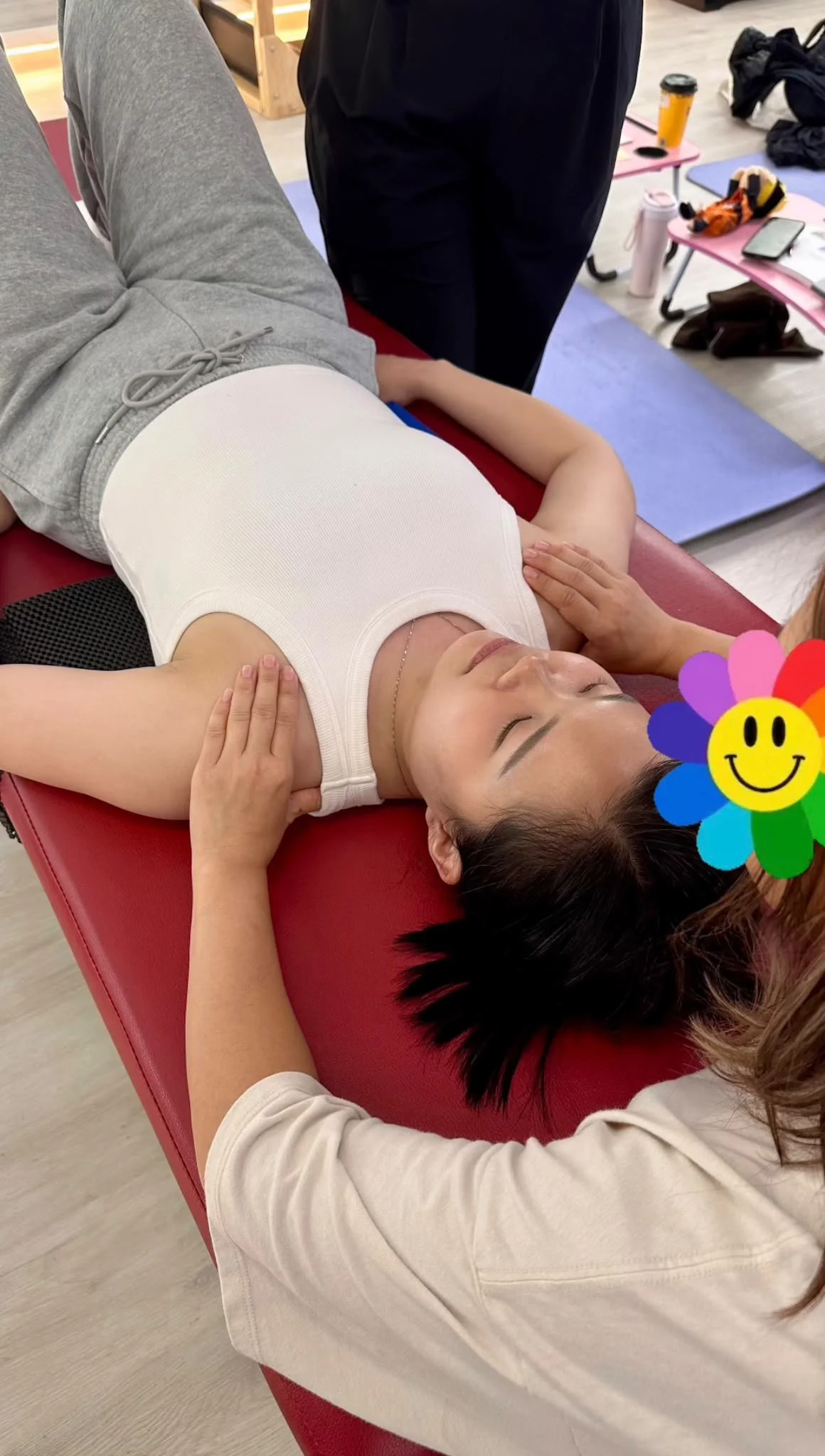
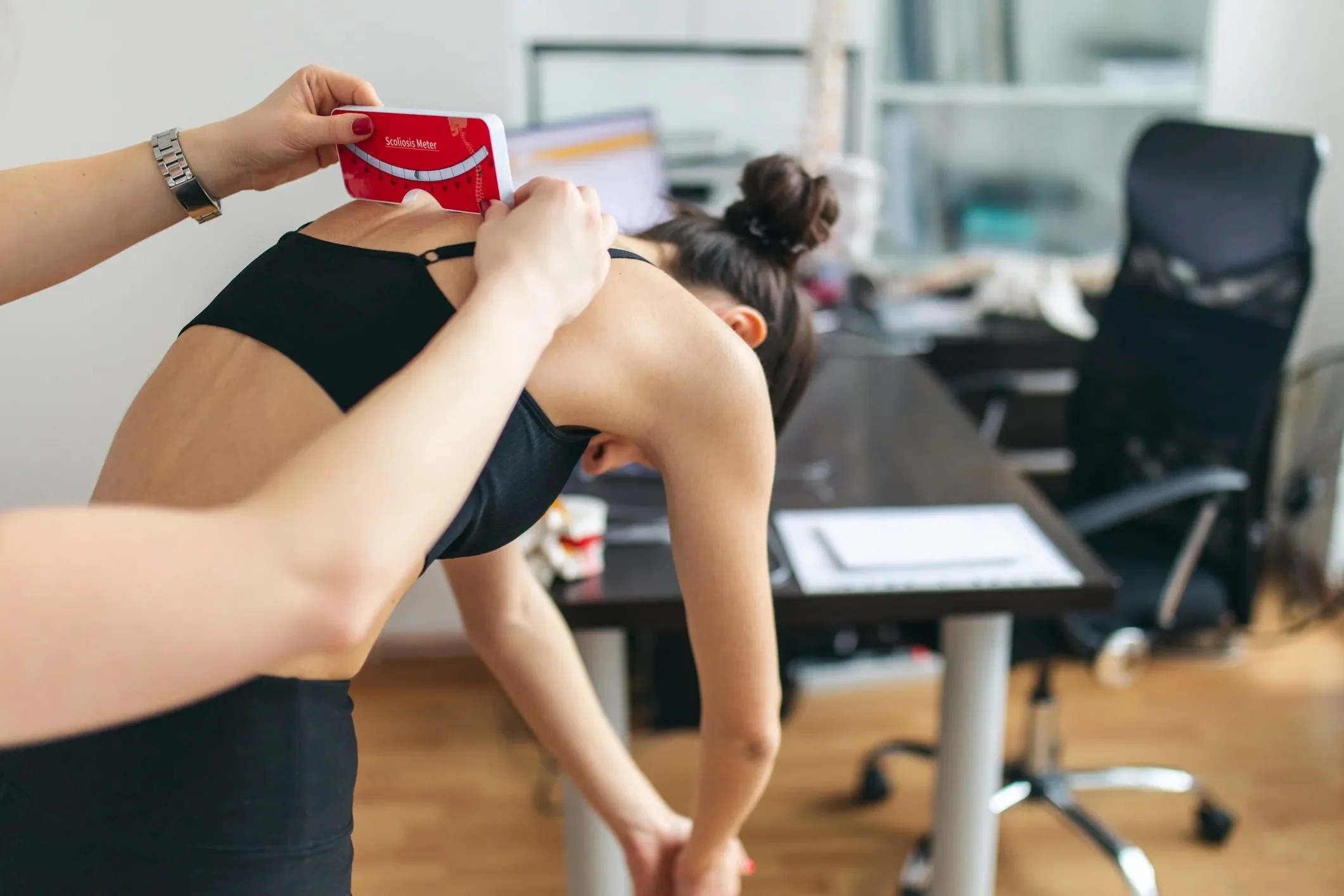
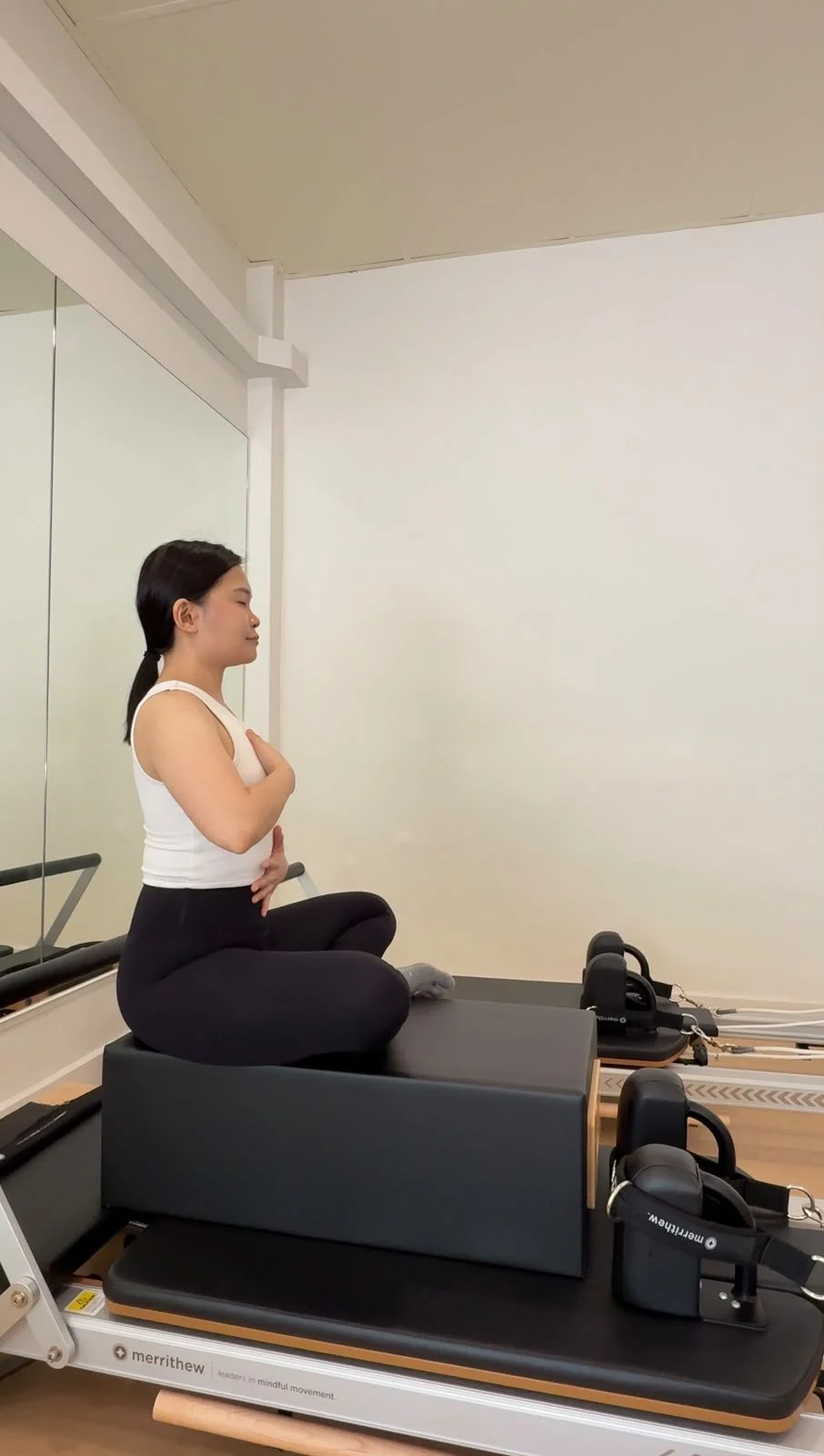
Scolio-Pilates® may still be suitable after spinal fusion surgery, once your surgeon has cleared you for the proposed exercise and your programme is adapted to your surgery, healing and current abilities. A fused spine does not mean you must stop moving. It does mean that exercise needs to respect the fused segments and any ongoing restrictions.
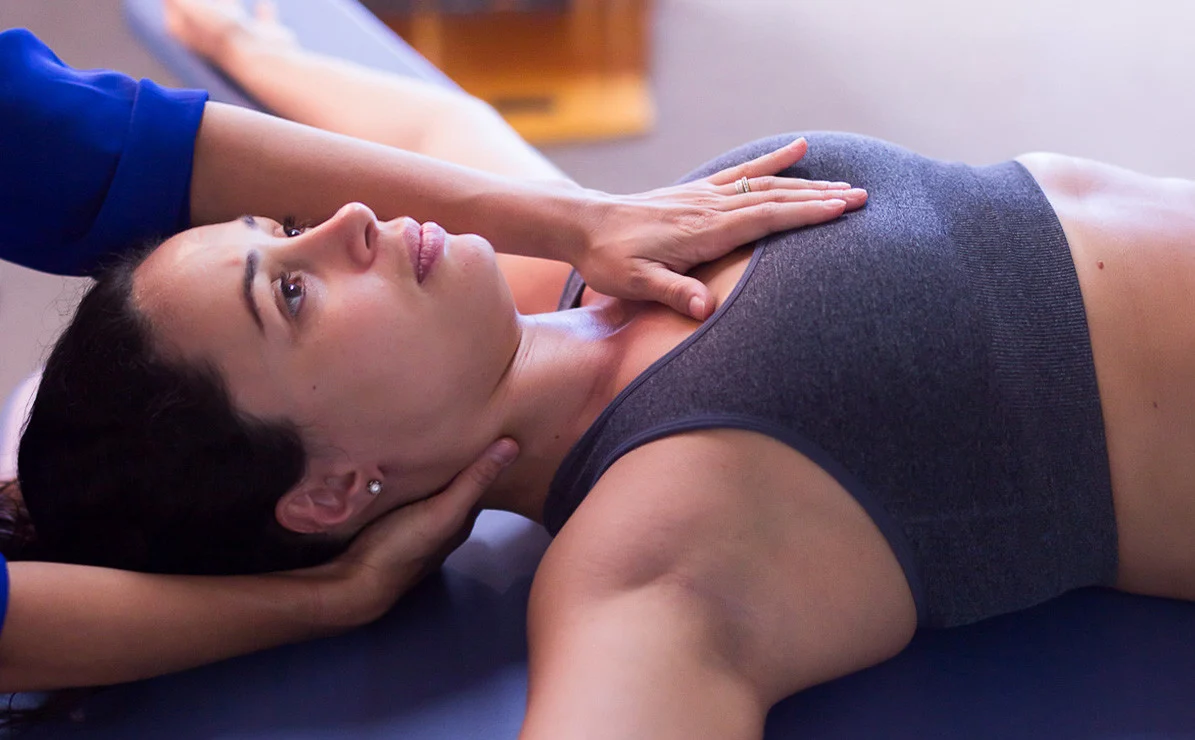
Key takeaways
- Get clearance from your surgical team before starting or resuming Scolio-Pilates after fusion.
- Exercise should support strength, movement confidence and everyday function without trying to mobilise the fusion.
- A Scolio-Pilates qualification does not replace surgical clearance or postoperative rehabilitation expertise.
- “Lengthening” is a posture cue, not a way to stretch fused vertebrae apart or a proven way to protect adjacent spinal segments.
Spinal fusion is a major milestone in scoliosis care. It aims to stabilise selected spinal segments and often improves alignment. Afterwards, it is understandable to ask: “Can I safely exercise, and is Scolio-Pilates still for me?” The answer depends on your individual recovery, rather than a blanket yes for every person or every stage.
What changes after spinal fusion?
Fusion joins selected vertebrae so that they heal together as a solid unit. Those segments are intended to remain stable rather than regain their previous movement. Your remaining spine and other joints still contribute to daily activities. The American Academy of Orthopaedic Surgeons explains how fusion stabilises and realigns the operated region.
Returning to activity is usually gradual. Your operation, the levels fused, bone health, symptoms, complications and follow-up findings all matter. Being comfortable or having healed skin does not by itself confirm that the fusion is ready for unrestricted loading.
How might an adapted movement programme help?
1. Practising movement awareness and coordination
After surgery, you may need time to become familiar with how your body moves. An individual programme can provide opportunities to practise comfortable positioning, balance and everyday movements. This is a practical training goal; it should not be presented as proof that the brain retains a specific “old scoliosis pattern” that Scolio-Pilates uniquely resets.
2. Building strength within your current abilities
When cleared, a progressive programme may work on trunk, hip and shoulder strength and endurance. The starting load, exercise selection and progression should follow your rehabilitation plan. A long-established fusion and a recent operation require different decisions.
3. Exploring posture without forcing the fused spine
A gentle cue to “grow tall” may help you explore a comfortable supported posture. It does not lengthen the fused bones or restore motion at the fusion. There is insufficient evidence to promise that axial elongation in Scolio-Pilates reduces stress on adjacent segments or prevents future degeneration.
4. Considering the whole body
Assessment can include the hips, shoulders, balance, walking and comfortable breathing, as well as the spine. Wedges or cushions may make a position more comfortable when individually chosen. Props do not make an otherwise restricted exercise safe, and they should not be used to force symmetry or pressure the surgical area.
What does the evidence support?
Specialist guidance supports a gradual, individual return to activity after scoliosis surgery. The Scoliosis Research Society notes that recovery varies between people. The Royal National Orthopaedic Hospital also bases return to leisure activities on the procedure and the person’s pain, movement and strength.
These sources support individual recovery planning. They do not establish Scolio-Pilates specifically as safe or effective for every person after fusion, or as superior to other appropriately prescribed exercise. Strength, comfort and confidence are goals to discuss, rather than guaranteed outcomes.
When can I start?
There is no single start date that applies to everyone. Early recovery may focus on walking and the exercises provided by your hospital team. More demanding exercise follows surgical advice and reassessment. Do not use someone else’s recovery timeline as clearance for your own spine.
| Your situation | Appropriate next step |
|---|---|
| Recent surgery or restrictions still apply | Follow your surgical team’s recovery plan. Ask before adding Pilates or new loading. |
| Cleared for progressive exercise | Share the permitted movements and restrictions with your instructor and agree on an individual starting point. |
| Fusion was years ago and you feel well | Discuss a new programme with an appropriate clinician if your current restrictions or fusion details are unclear. |
| New or worsening symptoms | Pause the exercise and seek assessment rather than trying to stretch or train through the problem. |
Working with a trained practitioner
Choose an instructor trained in Scolio-Pilates who is willing to work within your surgical and rehabilitation advice. Certification alone does not establish expertise in managing every postoperative condition. A physiotherapist or other clinician with relevant postoperative experience may need to guide your rehabilitation or liaise with your surgeon.
Before your first session, bring or clarify:
- the date and type of surgery, and the levels fused;
- your surgeon’s current exercise clearance and restrictions;
- any complications, ongoing symptoms or relevant follow-up findings;
- your existing rehabilitation programme and everyday goals.
Your team should clarify permitted bending, twisting, lifting, resistance and impact. Avoid forceful attempts to mobilise the fused region. There is no universal list of Pilates exercises that is safe for all fusions.
When should I contact my surgical team?
After surgery, contact your surgical team promptly for a new or worsening symptom, particularly increasing pain, fever, wound redness or drainage. Stop an exercise that causes new pain, numbness or weakness and seek advice.
New bladder or bowel dysfunction, loss of sensation around the genitals or anus, or new significant leg weakness requires emergency assessment. Sudden chest pain or severe breathlessness also needs emergency care. Go to an emergency department rather than booking a routine exercise session. See NHS back-pain guidance for neurological warning signs.
Frequently asked questions
Can Scolio-Pilates undo or loosen my fusion?
That is not the purpose of the programme. A successful fusion is intended to remain stable. Exercise should work within your permitted movement and loading, not try to restore motion at fused segments.
Do I need to be pain-free before starting?
Your surgical or rehabilitation team should decide what symptoms are acceptable during your stage of recovery. New, unexplained or worsening pain needs assessment; do not use a class to test whether a painful movement is safe.
Is 3D breathing suitable after surgery?
Comfortable breathing awareness may be included if your team agrees, but positioning, pressure and effort need to suit your recovery. Joanne’s introduction to 3D or Jellyfish breathing is general education, not postoperative clearance.
Will I need Scolio-Pilates forever?
No particular branded programme is essential for everyone. Your longer-term plan should reflect your preferences, function and clinical needs, with reassessment when necessary.
The takeaway
Spinal fusion provides stability at the operated levels. Appropriate movement can remain part of life afterwards. If you are cleared for exercise, an adapted Scolio-Pilates programme may be one option for working towards strength, confidence and comfortable function, while respecting the fusion.
Related reads
- If You Could Only Do One Scoliosis Exercise, Which One Should It Be?
- What Is Scoliosis? Signs, Cobb Angle & When to Get Checked
- Who Gets Scoliosis? Age, Growth Spurts, and Adult Cases
References
- American Academy of Orthopaedic Surgeons. Surgical Treatment for Scoliosis.
- Scoliosis Research Society. Surgery.
- Royal National Orthopaedic Hospital. A Patient’s Guide to Single Stage Posterior Scoliosis Correction Surgery.
- NHS. Back pain.
General education only. Your surgeon’s advice and individual rehabilitation plan take priority.
Discuss exercise after spinal fusion
Contact ASPINE Wellness to discuss whether an individual Scolio-Pilates session with Joanne Goh is suitable after your surgical team has cleared you. Bring your recovery advice and restrictions. Urgent symptoms require medical care.